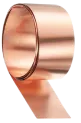


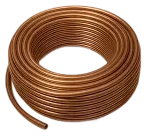
Oxygen-Free Copper Rod 12mm
12mm diameter · Copper with silver 99.99% · Conductivity over 101% IACS
Technical Specifications
| Diameter | 12 mm |
|---|---|
| Copper with Silver | Min. 99.99% |
| Oxygen | 0 to 5 ppm |
| Electrical Conductivity (20°C) | More than 101% IACS |
| Oxide Layer Thickness | 15 to 50 Å |
| Tensile Strength | 175 N/mm² |
| Elongation (A250) | More than 54% |
| Hydrogen Embrittlement Resistance | More than 10 bending cycles |
| Drawability (Thinning) | Down to 0.05 mm |
| Length per Coil | 10,000 to 11,000 m |
| Coil Inner Diameter | 95 cm |
| Coil Outer Diameter | 180 cm |
| Weight per Coil | 4 to 4.8 tons |
| Packaging | On a 1.8 × 1.8 m wooden pallet with plastic wrapping |
| Standard | ASTM B49-10 |
Product Description
Oxygen-Free Copper Rod is one of the purest grades of industrial copper, widely used in sensitive electrical, electronics, and telecommunications industries due to its very high electrical conductivity and exceptional purity.
Lorem ipsum dolor sit amet, consectetur adipiscing elit, sed do eiusmod tempor incididunt ut labore et dolore magna aliqua.
Applications
- Production of enameled wire for motors and transformers
- Cable manufacturing and high-voltage copper wire industry
- Electronics, telecommunications, and semiconductor industries
- Sensitive automotive components and hybrid systems
Key Advantages
- Electrical conductivity exceeding 101% IACS
- Resistance to hydrogen embrittlement
- High flexibility and drawability down to 0.05 mm
This section can be customized with more detailed product information, certifications, and application case studies.
A 12 mm copper wire rod is a thick copper section for industrial applications and should not be confused with 1.2 mm copper wire. This section is used in heavy-duty electrical projects, grounding systems, wire and cable manufacturing, and certain drawing processes. When purchasing, the type of copper matters a great deal — especially if you need oxygen-free 12 mm copper wire rod. Copper purity, surface quality, supply form (coil or bar), and the product’s technical specifications must align with its intended application. On the other hand, the price of this product is influenced by domestic copper rates and the global LME price. For tonnage orders, checking the day’s price and supply terms before purchasing is essential.
Comprehensive Buying Guide for 12 mm Copper Wire Rod
When purchasing 12 mm copper wire rod, the choice of alloy and purity level must match the intended use. For applications where high electrical conductivity and controlled oxygen content matter, oxygen-free copper wire rod is the more specialized option. In contrast, ETP copper, with a typical purity of about 99.9%, is used in many general power industry applications. Comparing the prices of these two products without considering copper type, production method, and technical specifications can lead to the wrong choice.
What’s the Difference Between OFC and ETP 12 mm Copper Wire Rod?
The main difference between OFC and ETP comes down to oxygen content and copper purity. Oxygen-free copper (OFC) is manufactured with very tightly controlled oxygen levels and is preferred for applications where high conductivity and uniform metallurgical quality matter. ETP copper, on the other hand, contains a controlled amount of oxygen and, due to its favorable balance between price and electrical properties, is widely used in the wire and cable industry and electrical equipment.
When choosing between the two, it’s best to review the product’s technical specifications, manufacturing standard, and the requirements of the final process — especially when the rod will undergo drawing, forming, or thermal processes.
Technical Specifications and Standard Purity Level (99.9%)
In industrial copper wire rods, a purity of about 99.9% is typical for ETP grades. Higher-purity oxygen-free copper wire rod, including OFC grades, is manufactured for more specialized applications. When purchasing from Ebtekar Mes Parsian, reviewing the lab analysis and the specifications listed in the product documentation provides a more accurate basis for quality assessment.
12 mm Copper Wire Rod Price and the Factors Behind It
The price of 12 mm copper wire rod is not set at a fixed number. The base copper rate, rod type, order weight, market conditions, and supply costs all affect the price estimate. In industrial purchases, differences in copper grade and order volume can also change the price per kilogram. For this reason, an accurate estimate requires reviewing the product specifications and required quantity alongside the day’s copper rate.
The Impact of the Commodity Exchange Rate and Global LME Price
Global copper prices and domestic trading rates are among the main factors influencing the price of the rod. The LME is one of the key references for copper pricing in the global market, and its fluctuations affect raw material supply costs. In the Iranian market, copper trading rates on the commodity exchange also play a role in shaping the price of copper materials and products.
Beyond the copper rate, exchange rates, production costs, shipping, and supply conditions can also change the rod’s final price. Therefore, comparing prices from different days without accounting for the time of inquiry is not an accurate basis for purchasing.
The Difference Between Bulk (Tonnage) and Retail Purchase Pricing
Order volume is one of the factors affecting the sales terms for 12 mm copper wire rod. For tonnage orders, the pricing structure and associated supply costs differ from limited orders, and pricing can be offered based on the exact order quantity.
For retail purchases as well, the actual product weight, required length, and packaging type must be specified. For an accurate price quote, it’s best to determine the order quantity, copper type, supply form, and delivery location from the outset.
Main Industrial Applications of 12 mm Copper Wire Rod
12 mm copper wire rod serves as a raw material in the copper conductor production chain and for certain electrical equipment. Some applications of this size relate to its direct use in electrical systems, while others relate to manufacturing and drawing processes. The main applications include:
- Copper wire and cable manufacturing: Used as raw material in wire and cable production lines, with the rod’s diameter gradually reduced through the drawing process.
- Drawing and producing smaller-diameter rods: Fed into drawing machines to produce rods and wires with the diameters required by various industries.
- Producing copper conductors for power cables: Used in manufacturing conductors that require high electrical conductivity and a specific cross-sectional area.
- Manufacturing stranded and multi-strand conductors: The base rod is used to produce copper strands, which are then formed into multi-strand conductors.
- Producing busbars and copper bars: Copper is used as raw material for manufacturing busbars and conductive components used in switchgear panels and power distribution equipment.
- Manufacturing conductors for power equipment: Used in the production chain for conductors used in transformers, generators, and certain power electrical equipment.
- Producing coils and electrical conductors: Used after undergoing the necessary processes to achieve the required diameter and form for electrical equipment.
- Grounding and bonding systems: Copper conductors used in grounding connection paths and equipment bonding, provided the cross-section and conductor specifications comply with design requirements.
- Grounding wells and earthing networks: Copper conductors used in parts of grounding systems where project specifications justify the use of copper.
- Lightning protection systems: Copper conductors used in down-conductor paths and bonding networks, where they comply with the design and standards of the lightning protection system.
- Manufacturing electrical parts and connectors: Used as raw material for producing certain terminals, connectors, and copper components after machining or forming.
- Power industries and transmission/distribution equipment: Supplying raw copper material for manufacturing or reprocessing conductors and conductive parts in electrical equipment.
- Producing copper conductors for industrial equipment: Used in production lines for parts and conductors that require high conductivity, good formability, and specific dimensions.
The type of copper, surface quality, mechanical condition, and production process should be selected according to the application. Especially in the drawing process, the quality of the initial rod can affect the performance of the production line and the quality of the final product.
Supply Forms of 12 mm Copper Wire Rod
Depending on the production process, method of use, and buyer’s needs, 12 mm copper wire rod is supplied in several forms:
- Coil: The common option for drawing and re-drawing lines, allowing continuous feeding of the machine. Coil weight is determined based on order quantity and production conditions.
- Bar: For applications requiring pieces of a specific length, the rod can be supplied in bar form or cut to the required length after production.
- Annealed: Through annealing treatment, the rod’s hardness is reduced and its formability increased. This form is used for processes where flexibility and reshaping of the rod matter.
How to Identify Genuine, High-Quality 12 mm Copper Wire Rod
Identifying the quality of 12 mm copper wire rod starts with a visual inspection, but testing and technical documentation are more important for confirming purity and chemical composition. Especially when purchasing oxygen-free 12 mm copper wire rod, color and surface appearance alone cannot determine the copper type or purity level.
To evaluate the product, check the following:
- Chemical analysis certificate: The copper percentage and accompanying elements should be specified in the analysis sheet. This document is one of the most important records for reviewing the product’s grade and chemical composition.
- Oxygen content: In OFC rods, oxygen content is a key indicator for identifying the product grade and should be verifiable in the lab analysis.
- Electrical conductivity: Measuring conductivity provides more precise information about the rod’s electrical performance and should match the specifications of the intended grade.
- Dimensional control: The rod’s diameter should be measured at several points to confirm dimensional uniformity and compliance with the specified tolerance.
- Surface inspection: The surface should be free of cracks, scaling, deep scratches, contamination, and unusual manufacturing defects; however, a good appearance alone does not prove copper purity.
- Coil condition inspection: For coiled rod, winding order, transport damage, and unwinding behavior should also be checked.
- Compliance with the stated standard: The product standard and copper grade should be specified in the technical documents, and this information should match the analysis results and the product’s actual specifications.
Steps to Order and Purchase 12 mm Copper Wire Rod from Ebtekar Mes Parsian
To purchase 12 mm copper wire rod from Ebtekar Mes Parsian, defining your technical requirements and order conditions before requesting a price quote makes the purchasing process more precise. The ordering process works as follows:
- Specify requirements: Determine the copper type, rod diameter, supply form, order quantity, and final application.
- Request a price quote and supply terms: The product’s daily price, availability, minimum order quantity, and delivery terms are reviewed based on the requested specifications.
- Receive technical information: If needed, technical specifications and product analysis are provided to review the grade, purity, and other relevant indicators.
- Confirm the order: Once agreement is reached on product specifications, quantity, price, and delivery terms, the order is registered.
- Preparation and shipping: The product is prepared according to the order terms and delivered for shipment to the coordinated destination.
For bulk orders, it’s best to determine the required quantity, rod type, and supply form from the outset so that price inquiries and supply planning can be carried out more accurately.
Frequently Asked Questions
How is the price of 12 mm copper wire rod calculated?
The price is determined based on the day’s copper rate, rod type, weight or order quantity, supply conditions, and supply costs. For bulk orders, the exact price is quoted once the copper grade, tonnage, and delivery terms are specified.
What is the minimum order quantity for 12 mm rod?
The minimum order quantity depends on availability, rod type, supply form, and sales conditions. To find out the minimum order and whether the requested quantity can be supplied, order specifications should be reviewed at the time of inquiry.
What’s the difference between 12 mm rod and 1.2 mm size?
The 12 mm rod has a diameter of 12 mm, while the 1.2 mm rod or wire has a diameter of 1.2 mm. These two sizes differ significantly in cross-sectional area and application. The cross-sectional area of the 12 mm rod is about 100 times that of the 1.2 mm rod, so the industrial applications and processes used for each are fundamentally different.