


Importing Copper from Iran: A Step-by-Step Guide for International Buyers
Importing copper from Iran is a compliance exercise before it is a commercial one. A buyer who gets the specification, customs file and sanctions screening right protects margins, while one who gets them wrong risks cargo holds, blocked payments or enforcement action.
This guide follows the order a procurement team should work in, from sourcing and contract terms to customs clearance, sanctions compliance and payment. It applies to the key considerations for purchasing copper rod.
Sourcing Foundations and Iranian Supplier Verification
Before you request a single quote, you need to know exactly what you are buying, who you are buying it from, and how you will prove the goods match what you approved.
Defining Sourcing Requirements and Technical Specifications
A precise RFQ is your first defense against quality disputes.
Your RFQ must state technical specifications, tolerances, quantity, packaging, inspection method, destination and an Incoterms® 2020 term. Avoid vague requests for “high quality” goods. For copper cathodes, anchor the RFQ to:
- Minimum purity of 99.9935%
- ASTM-B115 standard
- HS Code 74031100
- SX/EW production
For copper rod, specify the applicable standard, diameter and tolerances in writing, just as you would for cathodes. When evaluating bulk copper purchases, buyers should confirm that the product specifications, required quantity and supplier documentation match their procurement requirements before proceeding with a contract to Buy Copper Concentrate in Bulk from Iran.
Multi-Layered Supplier Screening and Identity Verification
A low price says nothing about whether a supplier is genuine or reliable, so check these five areas first, then make sure every shipment matches the sample you approved.
| Area | Verify |
| Legal identity | Name, registration number, address, owners, signatory |
| Supply capability | Producer, processor or intermediary; raw-material source |
| Quality control | Inspection, batch IDs, non-conformity process, lab |
| Export readiness | Documents, packaging, logistics |
| Commercial reliability | Verifiable references and history |
State-linked producers such as NICICO lead primary output, and licensed traders also export. Confirm the counterparty’s real role. To prevent substitution:
- Code every sample and keep a sealed reference.
- State in the contract whether the sample is an exact baseline or a minimum floor, with remedies.
- Use independent Pre-Shipment Inspection (PSI) to match shipment samples to batch IDs, test reports and packing lists.
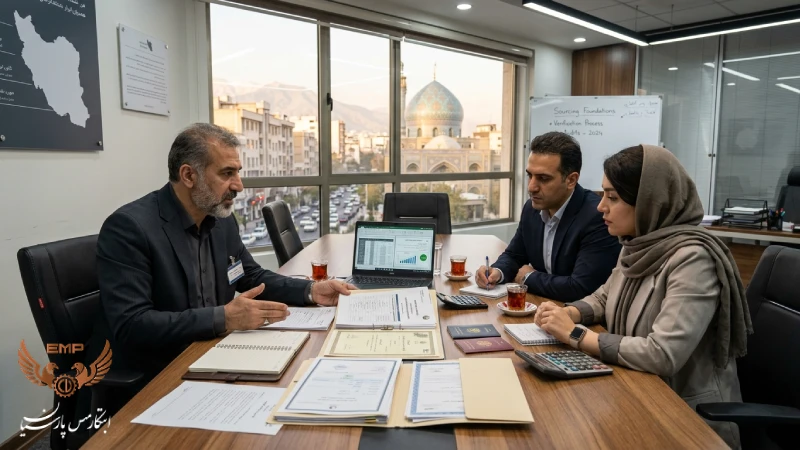
Operational Workflow and Contract Negotiation
A quotation becomes a real deal in three moves: work out what it will truly cost, fix where your responsibility begins, then lock both into the contract.
Step 1: Compare offers on landed cost, not unit price. A low export price can hide inspection, freight and customs costs that change the ranking of suppliers. Comparing Copper products from Iran alongside freight, inspection, insurance and customs costs helps buyers assess the total landed cost rather than relying on the quoted unit price alone.
Use this formula:
Total Landed Cost = P_unit + C_inland + C_export + C_PSI + C_freight + C_insurance + C_brokerage + T_duties/VAT + C_port + C_testing
| Cost component | What it covers |
| P_unit | Contract price of the product |
| C_inland | Origin inland transport and port handling |
| C_export | Terminal handling and export customs clearance |
| C_PSI | Pre-shipment inspection and laboratory testing |
| C_freight + C_insurance | Main international freight and marine insurance |
| C_brokerage | Destination customs brokerage |
| T_duties/VAT | Destination tariffs, taxes and statutory charges |
| C_port + C_testing | Destination port handling, demurrage contingency and arrival lab verification |
Step 2: Fix the delivery point with a named place. State the Incoterm with its location, for example FOB Bandar Abbas Incoterms® 2020. This sets exactly where risk, cost and responsibility pass from seller to buyer, and it decides which items in the formula above are yours.
Step 3: Write everything into an executable contract. Make sure the contract covers these clauses:
| Clause | What to include |
| Parties and specifications | Full legal names, addresses and technical sheets |
| Quantity and tolerance | Exact quantity and permitted variation |
| Price and Incoterms | Currency, unit price, total value and named-place Incoterm |
| Documents and inspection | Required documents, PSI protocol and lab accreditation |
| Payment terms | Approved channels, bank details and handling of delayed or rejected transfers |
| Claims and governing law | Notification windows, governing law and arbitration |
Iranian Customs Clearance Procedures and Documentation
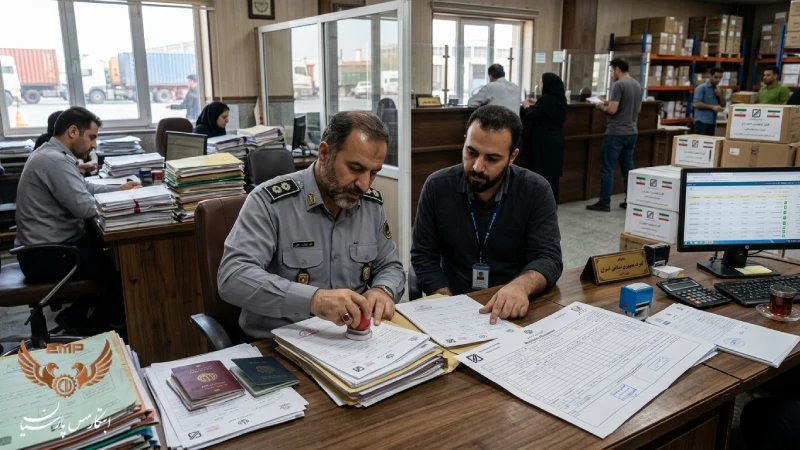
Cargo moving through Iranian ports is processed by the Islamic Republic of Iran Customs Administration (IRICA), and knowing what each stage demands from you is the best way to avoid the holds that most often stall shipments.
IRICA regulates all commercial imports and exports crossing Iranian borders. Its digital systems, such as the Electronic Customs Portal (EPL), let importers, exporters and licensed customs brokers submit pre-arrival declarations, upload transport documents and track processing electronically.
Duties and VAT are calculated from the 6-digit Harmonized System (HS) code and national tariff subdivisions, using IRICA’s annually updated tariff book. For copper cathodes the code is HS 74031100. Confirm the classification before dispatch.
The Five-Step Clearance Workflow
These five stages take a shipment from electronic declaration to final release, and each one has a specific action for you to complete.
- Pre-arrival declaration. You or your licensed broker submits basic shipment details through EPL before the cargo arrives. File early, with data identical to your shipping documents.
- Cargo arrival and inspection. At gateways such as Bandar Abbas, customs conducts risk-based or random physical checks. Inspectors compare container seals, package counts, batch markings and physical condition with the manifest.
- Document submission and validation. The full shipping and regulatory set is submitted electronically or in hard copy. Have your broker review drafts before dispatch to catch discrepancies early.
- Assessment of duties and taxes. Officials calculate duties, VAT and statutory assessments from the HS code. Compare the result with your landed-cost model.
- Payment and release. Once duties, taxes and port fees are paid, IRICA issues final clearance, and you can move the goods from the port facility.
Essential Customs Documentation Checklist
Inconsistent information across documents is a leading cause of port delays and cargo detentions. Prepare all seven documents together:
- Commercial Invoice: detailed description, unit price and Incoterm
- Packing List: net and gross weights, package count, marks and batch numbers
- Bill of Lading or Air Waybill: an order bill of lading is consigned to order or to a bank
- Certificate of Origin: attested by the relevant Chamber of Commerce
- Customs Declaration Form: submitted through the EPL portal
- Marine Insurance Certificate: matches the risk allocation in the contract
- Regulatory approvals: import licenses, health certificates or standards certificates
Party names, legal addresses, product descriptions, HS codes, container markings, batch references and weights must match across every document in the set.
Clearance Timelines and Pitfalls
Expected clearance times depend on the shipment type, and three avoidable errors account for most of the delays.
| Shipment type | Typical clearance |
| Air freight | 1–3 business days |
| Sea freight | 3–7 business days |
| Restricted goods or complex inspections | 7+ business days |
Three pitfalls cause most delays:
- HS code misclassification leads to re-assessment, administrative fines and cargo holds. Verify the code against the tariff book before dispatch.
- Under-declared shipment value triggers value adjustments, severe penalties and customs fraud investigations. Declare the true contract value.
- Missing permits lead to port storage penalties or rejection. Secure licenses and certificates before shipping.
Trade Sanctions, Legal Risks, and Maritime Due Diligence
Permissibility cannot be judged from the commodity alone. Screen the whole chain across US OFAC, EU authorities and UK OFSI:
Buyer → Seller → UBOs → Banks → Intermediaries → Carrier → Vessel → Route
Executive Order 13871 authorizes blocking sanctions on significant transactions in Iranian iron, steel, aluminum and copper, plus CAPTA sanctions on foreign banks that facilitate them. Executive Order 13902 widens secondary sanctions risk. Obtain counsel’s written opinion first. The lawful answer may be that the deal cannot proceed.
Identifying Deceptive Shipping Practices
Sanctions evasion at sea tends to leave visible traces, so watch for these six warning signs.
| Practice | Indicator |
| AIS manipulation | Transponder disabled or falsified |
| Vessel identity theft | Altered IMO numbers or names |
| Document falsification | Forged bills or origin certificates |
| Ship-to-ship transfers | Mid-ocean cargo swaps |
| Voyage irregularities | Detours, unexplained transshipment |
| Flag hopping | Repeated re-registration |
Build in these controls:
- AIS clauses allowing termination for manipulation
- LRIT tracking alongside AIS
- KYC and UBO checks on all parties
- Verified origin documents and inspection certificates before cargo release
Financial Logistics and Compliant Payment Methods
Obtain written confirmation from each bank that a legal, operational channel exists. Under “Operation Economic Outcast,” OFAC targets foreign banks that facilitate Iranian access, so avoid shadow-banking structures built on front or shell companies.
Evaluating Trade Finance Instruments
Each payment method shifts risk differently between buyer and seller, so weigh them side by side before choosing.
| Instrument | Mechanism | Key risk |
| Letter of Credit (UCP 600) | Bank pays against strictly conforming documents | Document discrepancies |
| Documents against Payment (D/P) | Documents released after cash payment | Lower seller risk than D/A |
| Documents against Acceptance (D/A) | Documents released against an accepted time draft | Significant seller default risk |
| Open account and financing | Ship first, settle on credit terms | Timing; PO and receivables financing available |
| Banker’s Acceptance | Bank-accepted time draft | Must meet Federal Reserve Act Section 13 to be tradable |
Executive Checklist
Follow these ten steps, in order, before every shipment.
| Step | Action |
| 1. Specify | Write the RFQ with standard, tolerances and a named-place Incoterm |
| 2. Verify | Complete the five-area supplier record |
| 3. Approve sample | Code it, seal a reference, set the benchmark |
| 4. Model cost | Calculate total landed cost |
| 5. Screen | Check the full chain and get counsel’s opinion |
| 6. Confirm payment | Get written bank confirmation |
| 7. Contract | Sign with all required clauses |
| 8. Inspect | Match PSI samples to batch records |
| 9. Prepare customs | Confirm HS code, permits and matching documents |
| 10. Clear | Declare via EPL, pay duties, track by AIS and LRIT |
Conclusion
Importing copper from Iran succeeds or fails on preparation. A precise specification, a verified supplier and a full landed-cost model keep the commercial side under control. Matching documents and the correct HS code keep cargo moving through IRICA. Complete transaction-chain screening and a confirmed payment channel keep the deal lawful. Follow the steps in order, and treat counsel’s sign-off as a gate, not a formality.
FAQ
- Is it legal to import copper from Iran?
It depends on your jurisdiction and counterparties, so screen the full chain and get counsel’s written opinion first. - Does the cathode specification also apply to copper rod?
No, for rod you must write its own standard, diameter and tolerances into the RFQ. - What is the difference between D/P and D/A?
D/P releases documents only after cash payment, while D/A releases them against an accepted time draft, which carries higher seller default risk. - Should the approved sample be an exact baseline or a minimum floor?
Either works, but the contract must state which one applies and the remedies for non-conformity.