


Shipping Oxygen-Free Copper Internationally: Packaging, Incoterms, and Transit Time Strategy
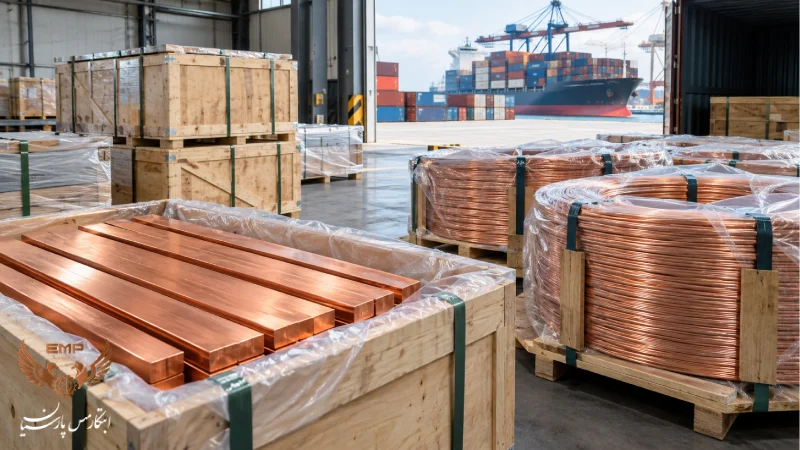
Oxygen-free copper (OFC) goes into semiconductors, aerospace systems, electrical equipment and medical devices because of its conductivity and purity. That same purity makes it unforgiving in transit. Humidity, salt air, thermal cycling and paperwork gaps can turn a premium shipment into a rejected one, followed by demurrage and a stalled assembly line.
Zero-defect arrival depends on three decisions made together: how the metal is protected, which Incoterm allocates the risk, and which transport mode fits the deadline.
1. Packaging & Corrosion Mitigation for High-Purity Copper
Corrosion is an electrochemical process driven by oxygen, surface moisture and electrolytes such as sea salt. Ocean voyages run two to eight weeks across several climate zones. By day, solar heat warms the container, and the expanding air absorbs vapor from cargo, dunnage and wooden pallets. At night the steel walls cool quickly, the air reaches its dew point, and container rain forms on the ceiling and drips onto the cargo.
Two factors make it worse:
- Corrugated boxes are hygroscopic. They absorb humidity, lose strength and hold moisture against the metal.
- Damp wood off-gases organic acids. This creates a corrosive micro-climate inside a sealed container.
Once the moisture mechanism is clear, the question becomes which materials actually stop it.
Sulfur-Free VCI Technology and Vacuum-Sealing Protocols
Protecting high-purity copper takes chemical and physical isolation together, built from three layers:
- Sulfur-free VCI paper. Volatile Corrosion Inhibitor (VCI) products designed for ferrous metals often contain compounds that react with non-ferrous metals, causing discoloration or verdigris. Specify sulfur-free grades made for copper and its alloys. Their vapor adsorbs onto the surface and forms a microscopic barrier against moisture and oxidation.
- Vacuum-sealable VCI film. For long sea legs or humid routes, combine VCI with vacuum packaging. Advanced films such as ZERUST® ICT®540-SDA keep inhibiting under reduced pressure and low oxygen. Vacuum sealing removes ambient air and vapor, and the film blocks outside oxygen and industrial acid gases.
- Desiccants and indicators. Place silica gel or clay units, sized per MIL-STD-2073, inside the barrier bag. Humidity indicator cards let the receiver verify integrity when the container is opened.
The table below summarizes what each protective material does and what it demands in practice.
| Protective Material | Primary Function | Operational Requirement |
| Sulfur-free VCI paper | Blocks oxidation and verdigris | Wrap tightly; must be non-corrosive to copper |
| Vacuum VCI film | Removes oxygen and moisture; blocks acid gases | Needs industrial heat-sealing for a hermetic closure |
| Desiccants | Absorb residual vapor | Sized to surface area and volume per MIL-STD-2073 |
| Closed-cell foam | Absorbs shock without holding water | CAD-cut channels let VCI vapor circulate |
Even the best materials fail if the metal is handled or stacked carelessly, so physical packing needs equal discipline.
Structural Packaging, Handling, and Mill Quality Standards
Industrial copper quality manuals set precise handling and packing rules, which come down to three areas:
- Bare-metal handling: Staff must wear clean gloves on unsealed copper. Skin oils contain salts and acids that leave permanent pitting beneath the VCI film.
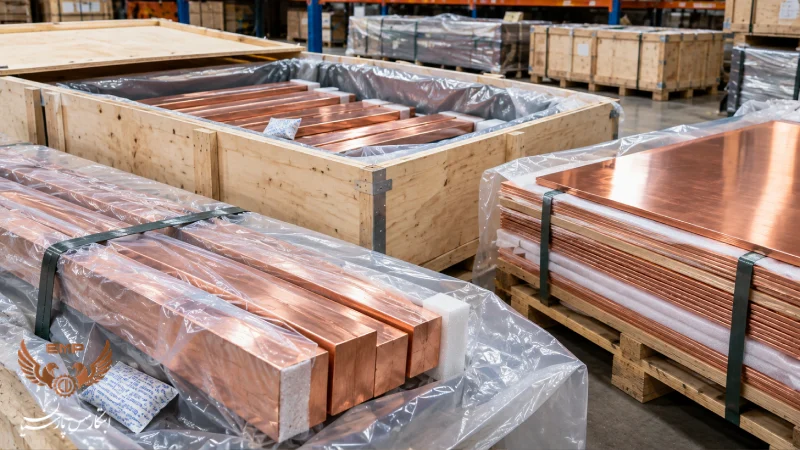
- Coils, sheets and bars: Secure coils on full mill skids larger than the coil diameter so handling equipment never strikes the edges. Pack bars in wooden crates wrapped in HDPE or neutral paper, with heat numbers kept strictly separate.
- Wood and bracing: All wood packaging material (skids, crates, dunnage) must meet ISPM 15 heat-treatment standards. Block and brace loads sideways and lengthways, and leave clearance for forklift tines and slings.
With the metal protected, the next risk is contractual: who pays for damage, and when.
2. Selecting the Right Incoterms for High-Value Copper Shipments
Incoterms fix the point where transport duties, costs and risk of loss pass from seller to buyer. On high-value metal, a poor match leaves unhedged financial exposure and invites border delays. The table below compares the five rules most relevant to OFC.
| Incoterm | Freight Paid By | Transit Risk Borne By | Destination Customs & Duty |
| FOB | Buyer | Buyer, from loading at origin port | Buyer |
| CIF | Seller | Buyer, from the ship’s rail at origin | Buyer |
| FCA | Buyer | Buyer, from handover to carrier | Buyer |
| CIP | Seller | Buyer, from handover to carrier | Buyer |
| DDP | Seller | Seller, to the buyer’s door | Seller |
FOB and CIF are strictly maritime terms. For air or intermodal OFC shipments, use Free Carrier (FCA) or Carriage and Insurance Paid To (CIP). Under Incoterms 2020, CIP obliges the seller to buy all-risk Institute Cargo Clauses A cover, which is far better protection for high-value technical metals.
FOB vs. CIF: Carrier Control and Insurance Coverage Gaps
The two maritime terms differ most in who controls the shipment and how well it is insured:
- Free On Board (FOB): The seller loads the cargo on the vessel at the origin port, and costs and risk pass to the buyer from there. Experienced importers prefer FOB because it gives them full control over carrier selection, freight rates, routing and the cargo insurance policy.
- Cost, Insurance and Freight (CIF): The seller pays ocean freight and buys marine insurance to the destination port, but risk still transfers to the buyer at the ship’s rail in the origin port. The seller only has to buy minimum cover, Institute Cargo Clauses C. ICC C responds to major vessel casualties but excludes routine condensation damage, rough handling and partial transit loss.
The practical consequence: if copper arrives oxidized under CIF, the buyer carries the loss and must claim on a policy bought overseas by the seller. When assessing sourcing options, buyers should compare Copper products from Iran based on material specifications, packaging requirements and the total cost of getting the shipment to its destination.
The Pitfalls of DDP and Importer of Record (IOR) Compliance
Under Delivered Duty Paid (DDP), the seller handles freight, insurance, import entry, duties, taxes and door delivery. That is convenient for the buyer but exposes the foreign seller to two main problems:
- In many jurisdictions a foreign business cannot act as Importer of Record without local tax registration, import licenses or a local entity.
- Sellers often miscalculate destination tariffs and taxes. When figures are disputed, customs holds the shipment and storage and demurrage accumulate daily.
Choosing the right term protects the money; choosing the right mode protects the schedule and the metal.
3. Transit Time and Documentation Integrity
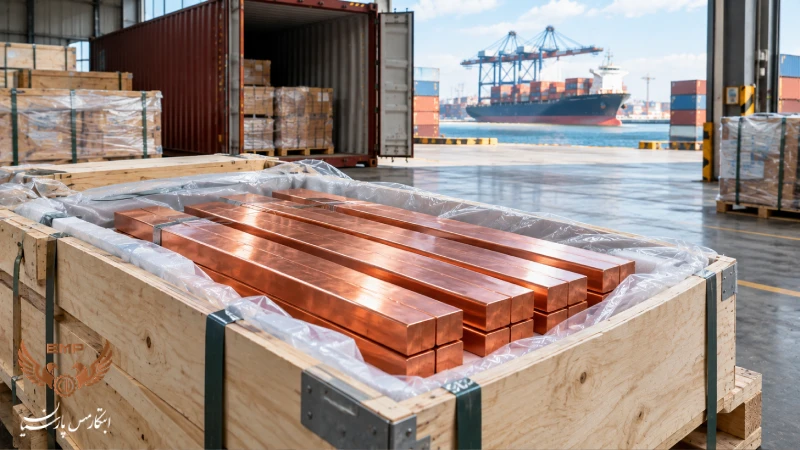
Transport mode and paperwork together decide whether OFC arrives on time and clears customs without a hold.
Air Freight vs. Ocean Freight: Landed Cost and Speed
Mode choice balances production deadlines against total landed cost, as the table below shows.
| Feature | Air Freight | Ocean Freight |
| Door-to-door transit | 1-5 days | 2-8 weeks |
| Cost per kg | 8-16× higher than sea | 3-4× cheaper on average |
| Pricing basis | Volumetric / chargeable weight | Container (FCL) or volume (LCL) |
| Corrosion exposure | Low | High: repeated thermal cycles and sea air |
| Best for | Line-stop risk, high value-to-weight cargo | Scheduled bulk replenishment |
Sea freight saves money at volume, but it ties up working capital and exposes the metal to repeated heating and cooling. On small consignments, fixed costs such as LCL minimums, documentation and port handling can erode the per-kg advantage, so air can be competitive on total landed cost. For buyers planning larger copper shipments, comparing transport costs and delivery requirements is essential before deciding whether to Buy Copper Concentrate in Bulk from Iran.
A simple decision rule:
- Is an assembly deadline measured in days? Choose air freight on FCA or CIP terms.
- Is the cargo heavy, bulky or a full container? Choose ocean freight on FOB terms.
- Neither? Compare door-to-door landed cost for air against LCL.
Once the mode is settled, documentation becomes the remaining source of delay.
Mill Test Reports (MTRs) and Customs Clearance Bottlenecks
Missing or inaccurate paperwork is the leading cause of clearance delays. Because OFC feeds precision applications, customs and receiving quality teams enforce documentation strictly. Every shipment needs a legible, complete Mill Test Report (MTR) and Certificate of Conformance (CofC) covering the following:
- Header traceability: seller name and address, buyer PO number, PO line item and material identification.
- Material specification: size, temper and exact alloy designation (for example UNS C10100 or C10200) matching ASTM/AMS standards.
- Melt and heat control: heat, lot or melt number legible on every page.
- Test data: full quantitative chemical analysis plus mechanical and physical results.
- Origin and compliance declarations:
- Country of melt and manufacture
- Mercury-free declaration
- Radioactive-free statement (“This material was not exposed to any radioactive source”)
- No weld repair certification
- Current RoHS and REACH compliance
4. International Standards and Protocols Behind Copper Shipments
Copper shipments follow a handful of international standards rather than one master protocol. The table below gathers those that apply to OFC and shows what each means in practice.
| Standard / Protocol | What It Governs | Practical Impact on OFC |
| Incoterms 2020 | Transfer of cost, risk and duties between seller and buyer | Decides who insures the metal and who clears customs |
| Institute Cargo Clauses A / C | Scope of marine cargo insurance | ICC A covers all risks; ICC C leaves condensation damage uninsured |
| ISPM 15 | Heat treatment of wood packaging | Unstamped skids and crates risk refusal at the border |
| MIL-STD-2073 | Packaging practice, including desiccant calculation | Sets how much desiccant each sealed bag needs |
| ASTM / AMS and UNS | Material and alloy specifications | The MTR must match the exact alloy, such as C10100 |
| RoHS and REACH | Restricted substances and chemical compliance | Missing declarations can trigger customs holds |
Tariff classification and import rules still vary by destination country, so confirm them with your customs broker before dispatch.
Checklist for Logistics Managers
Use this checklist to confirm each protection, contract and document is in place before a shipment leaves the dock.
- Specify sulfur-free VCI for all papers and films, engineered for copper alloys.
- Enforce clean-glove handling to prevent salt contamination on bare metal.
- Add active desiccants sized per MIL-STD-2073, with humidity indicator cards inside sealed barrier bags.
- Choose Incoterms deliberately. Avoid CIF for sea freight because of the ICC C gap; use FOB for ocean control or CIP for air.
- Verify ISPM 15 stamps on every pallet, crate and piece of dunnage.
- Audit MTRs before dispatch for lot traceability, melt origin, mercury-free and radiation-free statements, and RoHS/REACH compliance.